高血圧スクリーニング 年1回と現状の比較

― 文献名 ―
 Gregory M. Garrison, MD, MS, and Sara Oberbelman, MD. Screening for hypertension annually compared with current practice. Annals of Family Medicine. 2013 Mar-Apr; 11(2):116-121.


 ― この文献を選んだ背景 ―

 
 In the clinics or hospitals where I have ever worked, every patient was routinely checked their blood pressure. Sometimes I found high blood pressure in these patients, but if they didn’t have any symptoms and usual blood pressures were within the normal range, I told them that it was just because of the length of waiting time… This time, I wonder if this routine blood pressure check is effective or not, then chose this article.


 ― 要約 ―
【Purpose】
Hypertension is the most common diagnosis in ambulatory care, yet little evidence exists regarding recommended screening intervals or the sensitivity and specificity of a routine office-based blood pressure measurement, the most common screening test. Screening for hypertension is usually performed by measuring blood pressure at every outpatient visit, which often results in transiently elevated findings among adults who do not have a diagnosis of hypertension. We hypothesize that a more limited annual screening strategy may increase specificity while maintaining sensitivity.
【Methods】
A retrospective case-control study of 372 adults without hypertension and 68 patients with newly diagnosed hypertension was conducted to compare the usual screening practice of checking blood pressure at every visit with a second strategy that considered only annual blood pressure measurements. 
*subjects: family medicine patients at Mayo Clinic Rochester
*study period: 5 years
→Figure 1, Figure 2
【Results】
Specificity improved from 70.4% (95% Cl, 65.5%-75.0%) for the usual practice to 82.0% (95% Cl, 77.7%-85.8%) for the annual screening strategy. No statistically significant difference in sensitivity existed between the 2 methods. 
→Table 2
【Conclusion】
A limited annual screening strategy for hypertension can improve specificity without sacrificing sensitivity when compared with routine screening at every visit in previously normotensive adults.


 ― 考察とディスカッション ―
 Screening for hypertension is recommended to all adults. But if large numbers of disease-free individuals are screened repeatedly, then even highly specific tests can generate a number of false-positive results, for which patients must undergo further testing. In this article, to reduce the frequency of screening by 60.7%, they could achieve a significant decrease in the false-positive rate from 29.6% to 18.0%. 
Which strategy would you like to choose?

開催日:平成25年10月2日
高尿酸血症と痛風の患者におけるフェブキソスタットとアロプリノールの比較

– 文献名 –

Michael A. Becker, M.D., H. Ralph Schumacher, Jr., M.D., Robert L. Wortmann, M.D., Patricia A. MacDonald, B.S.N., N.P., Denise Eustace, B.A., William A. Palo, M.S., Janet Streit, M.S., and Nancy Joseph-Ridge, M.D., Febuxostat Compared with Allopurinol in Patients with Hyperuricemia and Gout, New England Journal Medicine 2005; 353:2450-2461

– 要約 –

BACKGROUND
Febuxostat, a novel nonpurine selective inhibitor of xanthine oxidase, is a potential alternative to allopurinol for patients with hyperuricemia and gout.

METHODS
We randomly assigned 762 patients with gout and with serum urate concentrations of at least 8.0 mg per deciliter (480 μmol per liter) to receive either febuxostat (80 mg or 120 mg) or allopurinol (300 mg) once daily for 52 weeks; 760 received the study drug. Prophylaxis against gout flares with naproxen or colchicine was provided during weeks 1 through 8. The primary end point was a serum urate concentration of less than 6.0 mg per deciliter (360 μmol per liter) at the last three monthly measurements. The secondary end points included reduction in the incidence of gout flares and in tophus area.

RESULTS
The primary end point was reached in 53 percent of patients receiving 80 mg of febuxostat, 62 percent of those receiving 120 mg of febuxostat, and 21 percent of those receiving allopurinol (P<0.001 for the comparison of each febuxostat group with the allopurinol group). Although the incidence of gout flares diminished with continued treatment, the overall incidence during weeks 9 through 52 was similar in all groups: 64 percent of patients receiving 80 mg of febuxostat, 70 percent of those receiving 120 mg of febuxostat, and 64 percent of those receiving allopurinol (P=0.99 for 80 mg of febuxostat vs. allopurinol; P=0.23 for 120 mg of febuxostat vs. allopurinol). The median reduction in tophus area was 83 percent in patients receiving 80 mg of febuxostat and 66 percent in those receiving 120 mg of febuxostat, as compared with 50 percent in those receiving allopurinol (P=0.08 for 80 mg of febuxostat vs. allopurinol; P=0.16 for 120 mg of febuxostat vs. allopurinol). More patients in the high-dose febuxostat group than in the allopurinol group (P=0.003) or the low-dose febuxostat group discontinued the study. Four of the 507 patients in the two febuxostat groups (0.8 percent) and none of the 253 patients in the allopurinol group died; all deaths were from causes that the investigators (while still blinded to treatment) judged to be unrelated to the study drugs (P=0.31 for the comparison between the combined febuxostat groups and the allopurinol group). CONCLUSIONS Febuxostat, at a daily dose of 80 mg or 120 mg, was more effective than allopurinol at the commonly used fixed daily dose of 300 mg in lowering serum urate. Similar reductions in gout flares and tophus area occurred in all treatment groups. 開催日:平成25年9月4日

高齢者の不健康な行為と能力低下(disability)の関係

– 文献名 –

 Unhealthy behaviours and disability in older adults: Three-City Dijon cohort study. Fanny Artaud PhD,et al.  BMJ 2013 ;347 :f4240

– この文献を選んだ背景-
 
 我々家庭医は高齢者を診る時、常にCGA(Comprehensive Geriatric Assessmesnt:高齢者包括機能評価)を念頭に入れて高齢者を診察している。今回、高齢者の能力低下に関わる事として、不健康な行為との関わりを研究した興味深い論文を読んだので紹介する。

- 要約 -

【目的】
 不健康な行為(低い/中間の肉体活動度、1日1回以下のフルーツ、野菜の摂取、現在の喫煙/過去の喫煙、全く飲酒しない/以前の飲酒/大量の飲酒)とフランスの高齢者の能力低下の危険度との関係(個々の行為と行為の組み合わせとの関係)を調査すること。またこれらの関係に関与する潜在的な因子を評価すること。

【デザイン】
前向きコホートスタヂィ

【セッティング】
Three -City studyのうちのディジョンセンター

【参加者】
3,982人(女性:2,410人(60.5%))
1999~2001年の間の65歳以上のフランス人
健康行為を評価した時点ではベースラインは能力低下はない

【主要評価項目】
3つの能力低下スケール(移動能力、IADL,ADL)から得られたデータの組み合わせ
能力低下の階層別指標(なし、軽度、中等度、重症)
2001~2012年までの間に5回評価

【結果】
 12年間のフォローアップ期間中に1,236人(女性:861人(69.7%))が中等度から重症の能力低下に進展した。能力低下の危険性に関与した項目として、低い/中間の肉体活動度(HR:1.72,95%CI:1.48,2.00)、1日1回以下のフルーツ、野菜の摂取(HR:1.24,95%CI:1.10,1.41)、現在の喫煙/過去の喫煙(HR:1.26,95%CI:1.05,1.50)、一方で、アルコール消費量には強い相関関係はなかった。能力低下に関係する不健康な行為の数が増えれば増えるほど能力低下の危険は増加した(P<0.001)。3つの不健康な行為を行っている人は何も不健康な行為がない人と比べるとの能力低下の危険性は2.53倍増した。逆の因果バイアスは最初の4年間で能力低下が見られた人は除外して、排除している。不健康な行為のスコアと能力低下との間の関係の30.5%がBMI,認知機能、うつ病の症状、外傷、慢性疾患、心血管疾患とそのリスクファクターによって説明される。最も関係しているのが慢性疾患であった。

【結論】
不健康なライフスタイルは能力低下の危険性と関係している。不健康な行為が増えれば増えるほど、その危険性は増す。慢性疾患、うつ病の症状、外傷、BMIは部分的にこの関係を説明した。

開催日:平成25年8月21日

高齢者における余暇活動と認知症リスク

– 文献名 –

 Leisure Activities and the Risk of Dementia in the Elderly J. Verghese and others(N Engl J Med 2003; 348 : 2508 – 16 : 

– 要約 –

Background
 Participation in leisure activities has been associated with a lower risk of dementia. It is unclear whether increased participation in leisure activities lowers the risk of dementia or participation in leisure activities declines during the preclinical phase of dementia.

Methods
 We examined the relation between leisure activities and the risk of dementia in a prospective cohort of 469 subjects older than 75 years of age who resided in the community and did not have dementia at base line. We examined the frequency of participation in leisure activities at enrollment and derived cognitive activity and physical-activity scales in which the units of measure were activity days per week. Cox proportional-hazards analysis was used to evaluate the risk of dementia according to the base line level of participation in leisure activities, with adjustment for age, sex, educational level, presence or absence of chronic medical illnesses, and base line cognitive status.

Results
 Over a median follow-up period of 5.1 years, dementia developed in 124 subjects (Alzheimer’s disease in 61 subjects, vascular dementia in 30, mixed dementia in 25, and other types of dementia in 8). Among leisure activities, reading, playing board games, playing musical instruments, and dancing were associated with a reduced risk of dementia. A one-point increment in the cognitive-activity score was significantly associated with a reduced risk of dementia (hazard ratio, 0.93 [95 percent confidence interval, 0.90 to 0.97]), but a one-point increment in the physical-activity score was not (hazard ratio, 1.00). The association with the cognitive-activity score persisted after the exclusion of the subjects with possible preclinical dementia at base line. Results were similar for Alzheimer’s disease and vascular dementia. In linear mixed models, increased participation in cognitive activities at base line was associated with reduced rates of decline in memory.

Conclusions
 Participation in leisure activities is associated with a reduced risk of dementia, even after adjustment for base-line cognitive status and after the exclusion of subjects with possible preclinical dementia. Controlled trials are needed to assess the protective effect of cognitive leisure activities on the risk of dementia.

開催日:平成25年8月14日

進行がん患者の化学療法の効果に対する期待

– 文献名 –

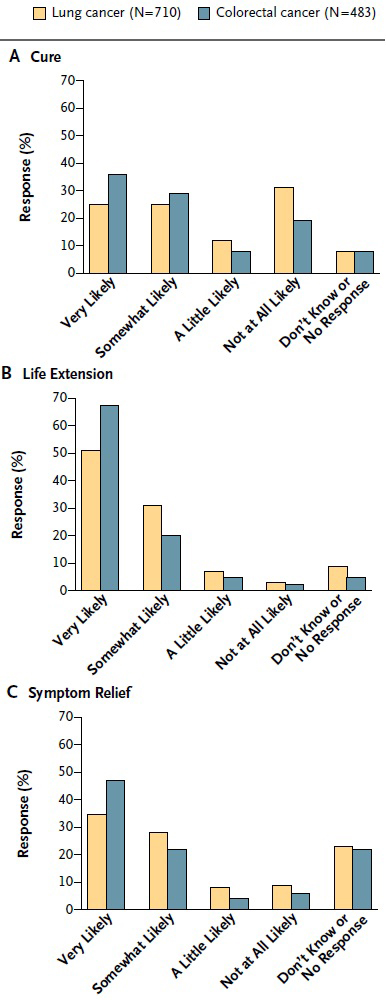
 Jane C. Weeks, et al.Patients’ Expectations about Effects of Chemotherapy for Advanced Cancer
N Engl J Med 2012; 367:1616-1625

– この文献を選んだ背景 –
 
 栄町に赴任してから在宅で6名の患者さんをお看取りさせていただいた。そのうち癌で看取ったのは4人いらっしゃるが、御家族の反応としてまったく悔いなくお看取りができたと考えている家族や、民間療法を行った方が良かったのではないかと考えている家族、癌が見つかった段階でもっと治療を受けさせた方がよかったのではないかと考えている家族などそれぞれの思いがあった。
 私自身は医師でありもし自分や家族が進行がんと診断された場合にとるであろう行動はイメージできるが、それぞれの家族の反応を見て改めて同じステージの癌でも患者さんやご家族が考えることは個別性のあるものであることを実感した。
 そうしていたところ、このような文献を見つけたので読んでみることとした。

– 要約 –

 背景:転移性肺癌あるいは転移性大腸癌は、化学療法によって生存期間が数週間から数ヶ月延長し、症状が緩和される可能性がある。ただ、癌の治癒そのものが得られるわけではない。

 方法:癌治療転帰調査サーベイランスCancer Care Outcomes Research and Surveillance(CanCORS)研究(アメリカのプロスペクティブ観察コホート研究)の参加者で、癌診断後4ヶ月の時点で生存しており、新た に診断された転移性肺癌または転移性大腸癌に対して化学療法を受けた1193人を対象とした。
 化学療法によって治癒する可能性があるという期待をもっている患者の割合を同定し、この期待に関連する臨床的因子、社会的因子、医療制度因子を検証した。診療録の再検討だけでなく、専門の面接者によって患者情報を得た。

 結果:1193人(肺癌710人、大腸癌483人)が登録された。全体で、肺癌患者69%と大腸癌患者81%が、化学療法によって癌が治癒する可能性が全くない ことを理解しているという回答をしなかった。多変量ロジスティック回帰では、化学療法に関する誤った考えを報告するリスクは、大腸癌患者のほうが肺癌患者 よりも高く(OR1.75; 95% CI, 1.29 to 2.37)、非白人患者やヒスパニック系患者では非ヒスパニック系白人患者よりも高く(ヒスパニックOR2.82; 95% CI, 1.51 to 5.27; 黒人OR 2.93; 95% CI, 1.80 to 4.78)、医師とのコミュニケーションについてとても良好であると評価した患者では、あまり良好でないと評価した患者よりも高かった(OR for highest third vs. lowest third, 1.90; 95% CI, 1.33 to 2.72)。
 社会的教育水準、身体的機能状態、意思決定における患者の役割と、化学療法に関する過度の誤認との関連はなかった。

130816

結論:
  化学療法を不治の癌に対して受けている患者の多くは、化学療法によって癌が治癒する可能性は低いことを理解していない可能性がある。ゆえに十分な情報に基 づいて、自身の意向に沿った治療を決定する能力に欠けている可能性すらある。医師は患者の理解を深めることが可能であるが、ただしこれが患者満足度の低下 という代償を伴うおそれもある。

– 考察とディスカッション –

 今回の研究で進行がん患者が化学療法の限界に対して正しく認識していない可能性があることがわかった。しかし、治癒は期待できなくても予後の延長や症状緩和への期待はできることから進行がん患者の治療の選択としては有用である場合があるため、患者との決断の共有が非常に重要になると思われる。
 また、医師患者関係が良い方があまり良好でないと答えた群よりも化学療法に関する誤った報告をするリスクが高いことは非常に驚いた。医師患者関係が良好であるほど患者が楽観的になる傾向があるかもしれないし、医師もシビアな情報を提供しにくいと考えてしまうかもしれないと感じた。
 地域でケアを受けている患者に誤解が少なかったとの結果もあり、他職種と連携しながら患者のアプローチをするなど地域特有の距離感などが有用であるかもしれないと感じた。患者との関係性を維持しながら終末期の患者に対して適切な時期に効果的な終末期ケアを導入できるように努力する必要があると感じた。

開催日:平成25年8月14日

ソーシャルメディアにおける医療者のプロフェッショナリズム

- 文献名 -
 Jeanne M. Farnan, MD et al: Online Medical Professionalism: Patient and Public Relationships: Policy Statement From the American College of Physicians and the Federation of State Medical Boards. Ann Intern Med. 2013;158(8):620-627.

- この文献を選んだ背景 -
 最近世間のSNSなどの利用度が急激に増し、自分自身も時に利用することもある。
便利な反面、怖さもあるこのようなツールに対して米国から医師に対する指針が発表されたため、参考になればと思い紹介したい。

- 要約 -
 
【背景】
 Web上でのコミュニケーションツールのイノベーションはここ数年でめまぐるしい。一方で医師がどう使用するかということに対するポリシーやガイダンスはほとんどない。この文献はオンライン上での医療倫理とプロフェッショナリズムを考える上での枠組みを提案するものである。

【方法】
 この指針は米国内科学会American College of Physicians (ACP) と米国州医事評議会連合Federation of State Medical Boards (FSMB)によって作成されたものである。2011年5月~2012年10月に検討された。その後外部の査読などを加え作成されたものである。

【Positions】

① オンラインメディアを用いることは患者、医師にとって非常に教育的な利点をもたらしうる。しかし、倫理的な問題も生じうる。プロとしての、患者医師関係における信頼を維持するには関係性、信頼、プライバシー、そして人に対する尊敬の念を一貫して守ることが求められる。
 ・facebookなどでの現在、もしくは過去の患者とのやり取りはすべきではない。

② プロフェッショナルとしての立場と個人としての立場に分ける境界が不鮮明となりがち。常に2つの立場を意識し、それぞれしっかりと振る舞うべきである。
・”pause-before-posting” どう受け止められるか考えるように。
 ・研修医、学生、他のスタッフらとの関係にまで言及。関係性があいまいになりうるので注意が必要。
 ・ACPとFSMBはEメールでの患者とのやり取りは支持しない。

③ Eメールや他のコミュニケーションツールは、患者の同意を得た上で患者医師関係を構築するために医師としてのみ用いるべきである。患者ケアについてのやり取りはカルテに記載すべき。
 ・関係性ができていない患者とのEメールのやり取りはすべきではない。
 ・直接会って話をすることを補うに過ぎない。

④ 医師ランキングサイトや他の情報源などにおいて自分自身に対する利用可能な情報の正確性を定期的に評価するべきである。(self-auditing)

⑤ インターネット上のコミュニケーションは長きにわたり、時には永遠に残るものである。自分自身の医師人生において将来にわたり影響しうるものであることを認識すべきである。

【まとめ】
 今後もこのようなソーシャルメディアは変化していくであろう。今回の指針はスタートに過ぎず、今後も修正や時代への適応が必要である。医師にはそれらがどのような影響を持ちうるかを事前評価すべきであり、またそれらに対しての知識も持つ必要がある。

- 考察とディスカッション -
 専門職ゆえ、我々が与える影響力は、想像していた以上に大きいと感じた。
 様々な職種や患者との関係性がぼやけたり、医師と個人の立場が不明瞭になったりと使い方を間違うと非常に怖いツールであることも再認識できた。
 ただし、関係性がしっかりとできている間柄であれば、うまく使うとケアの質向上にも寄与しうる側面もあるようだ。 また、家庭医は特に患者や家族との関係性が濃密になりやすく、さらには地域に住んでいるとプライバシーの境界の不鮮明さも増す。しっかりとした患者との関係性を構築し、その上での適正な使用をすべきと再認識した。それができないようであれば、無理に使うことなく、基本的に医師としてのみの使用に徹するという考え方もあるように思えた。

開催日:平成25年8月7日

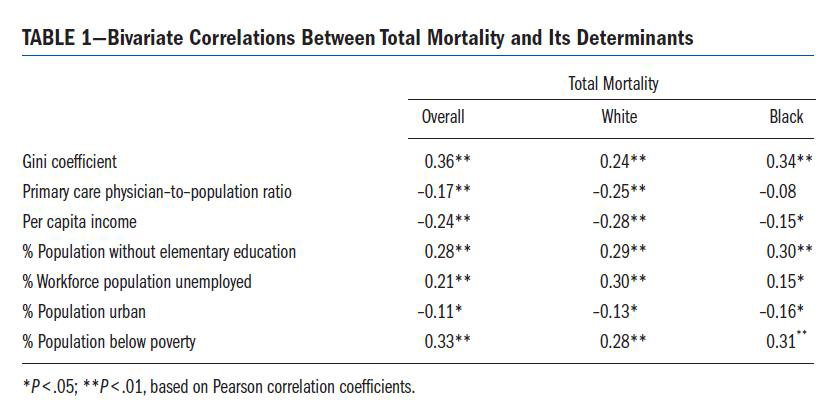
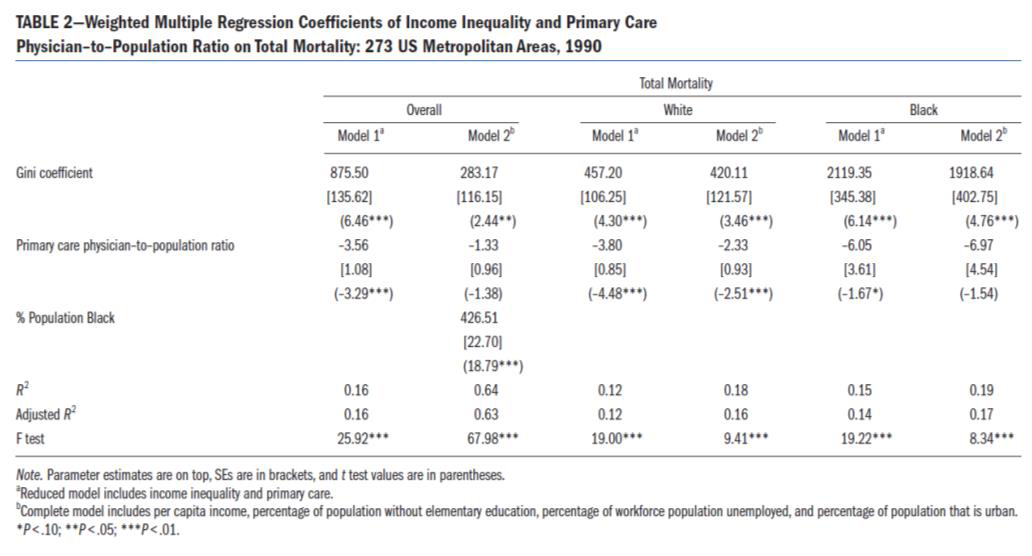
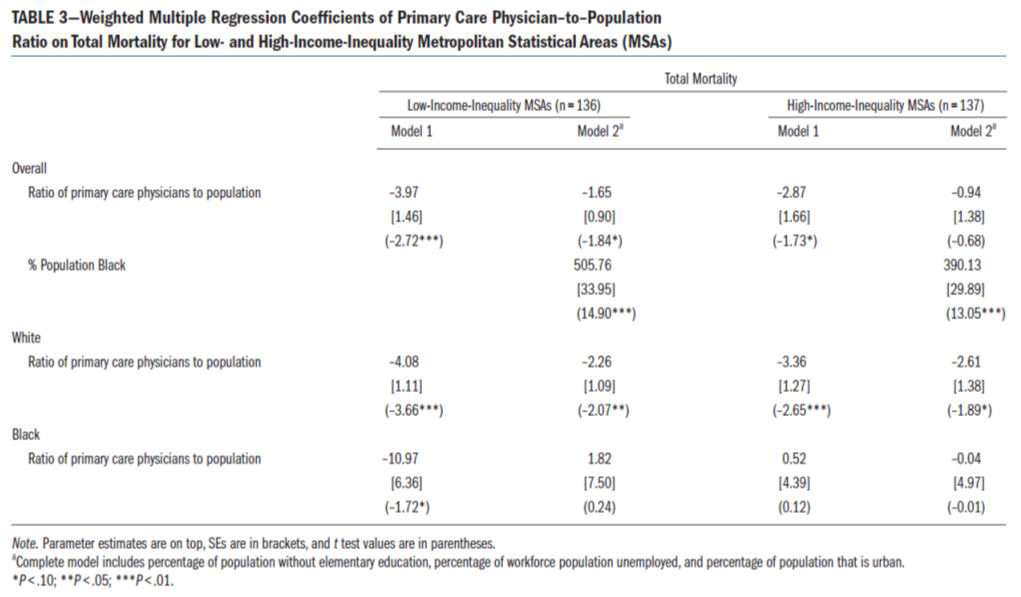
プライマリ・ケア医の供給と死亡率 ‐収入や人種の観点から‐

– 文献名 –

Shi L, Starfield B. The effect of primary care physician supply and
income inequality on mortality among blacks and whites in US metropolitan
areas. Am J Public Health. 2001
Aug;91(8):1246-50.

– この文献を選んだ背景 –

 In terms of medical policies, how access to care
influence population health is a relevant issue. My clinical question is “primary
care physician improve population health ? “. I searched for the evidence and
picked this article out for today’s discussion.

– 要約 –

Objectives:

This study assessed whether income inequality and primary care physician supply have a different effect on mortality among Blacks compared with Whites.
 
Methods:
We conducted a multivariate ecologic analysis of 1990 data from 273 US metropolitan areas.
 
Results:
Both income inequality and primary care physician supply were significantly associated with White mortality (P < .01).After the inclusion of the socioeconomic status covariates, the effect of income inequality on Black mortality remained significant (P < .01), but the effect of primary care physician supply was no longer significant (P > .10), particularly in areas with high income inequality.
 
Conclusions.
Improvement in population health requires addressing
socioeconomic determinants of health, including income inequality and primary
care availability and access.

↓ 画像をクリックすると全体が表示されます。
130726_1

↓ 画像をクリックすると全体が表示されます。
130726_2

↓ 画像をクリックすると全体が表示されます。
130726_3

– 考察とディスカッション –

 An econometric analysis has some weak points. First, omitted-variable bias is likely to occur because a dependent variable is influenced by numerous factors in social environment. Omitted-variable bias occurs when a model is created which incorrectly leaves out one or more important causal factors. Second, accurate regulations of confounding factors are usually difficult because of high complexity. But what is important is doing with the best knowledge available at the time. Policy should be done promptly and then checked whether it is effective or not. Social medicine needs a capability to evaluate policy which is ever adopted. 

開催日:平成25年7月17日

乳がん検診擬陽性者における長期的な心理・社会的影響

– 文献名 –
 John Brodersen, Volkert D Siersma. Long-Term
Psychosocial Consequences of False-Positive Screening Mammography. Ann Fam Med
2013;11:106-115.

– この文献を選んだ背景 –

 以前,Journal Clubで高齢者に対して便潜血検査を行うことは全体としてはharmが多いことを取り上げた.以来,スクリーニング検査についてはそのharmの面に注意を払うことが多くなった.そんな中で乳がん検診擬陽性者の長期的な心理社会的影響を取り扱った文献にであった.心理社会的影響をharmとして扱う研究を知らなかったので関心を持って読むことにした.

– 要約 –

【背景】
がんのスクリーニングプログラムは意図した成果が得られる可能性を秘めている一方で意図しなかった有害事象が発生することは避けられない.マンモグラフィーによる乳がん検診で最も頻度の高い有害事象は擬陽性の結果である.この擬陽性者の心理社会的影響を測定するためのこれまでの試みにはいくつかの限界があった.追跡期間が短いこと,測定法の妥当性や性能が不十分なものであること,妥当な比較対象(この場合乳がん患者)をおいていないことなどである.

【目的】
この研究の目的は乳がん検診において異常所見のなかったもの,擬陽性者,精査により乳がんが見つかったものの心理社会的影響を3年間にわたって優れた計測法で測定し比較することである.

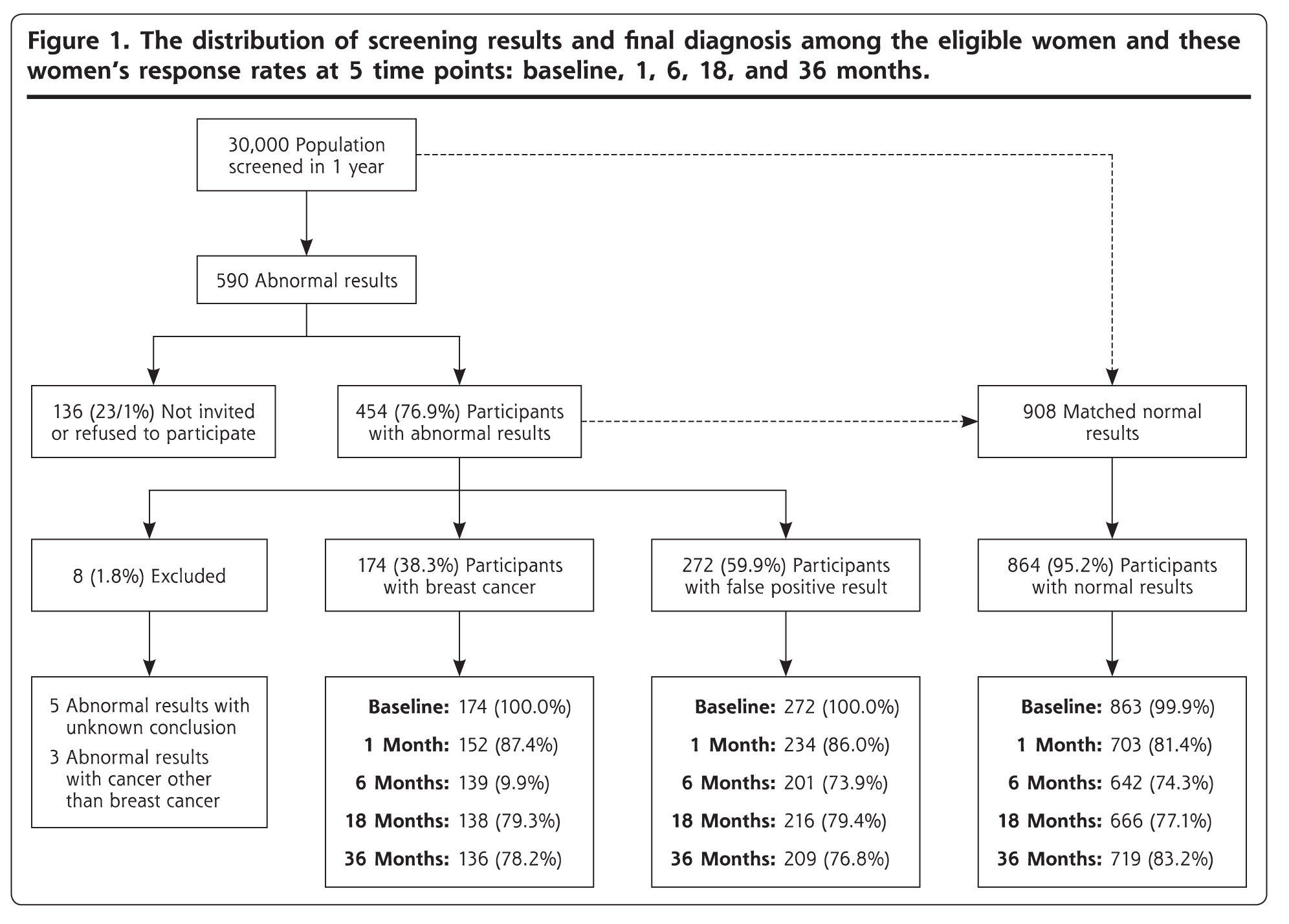
【方法】
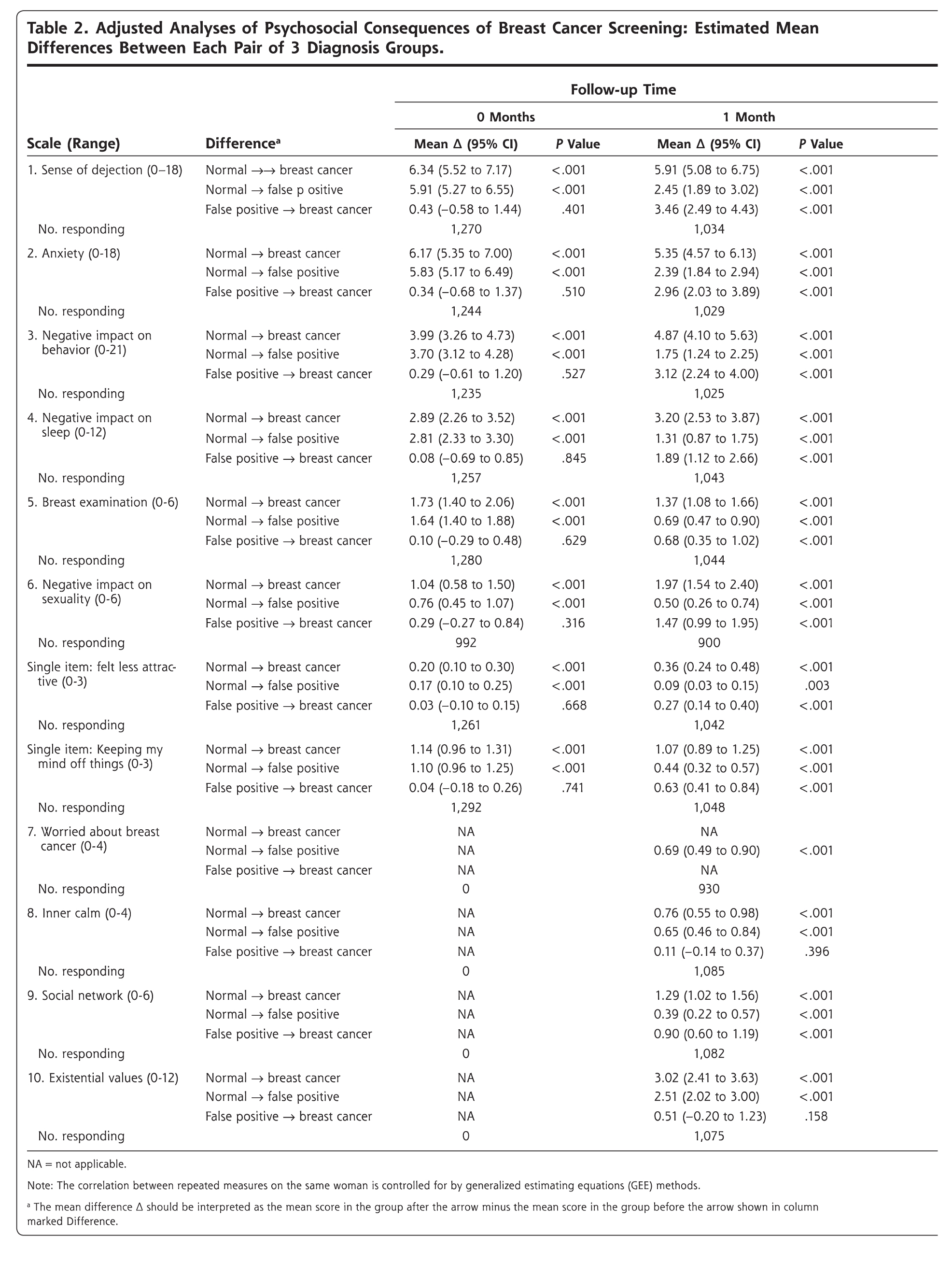
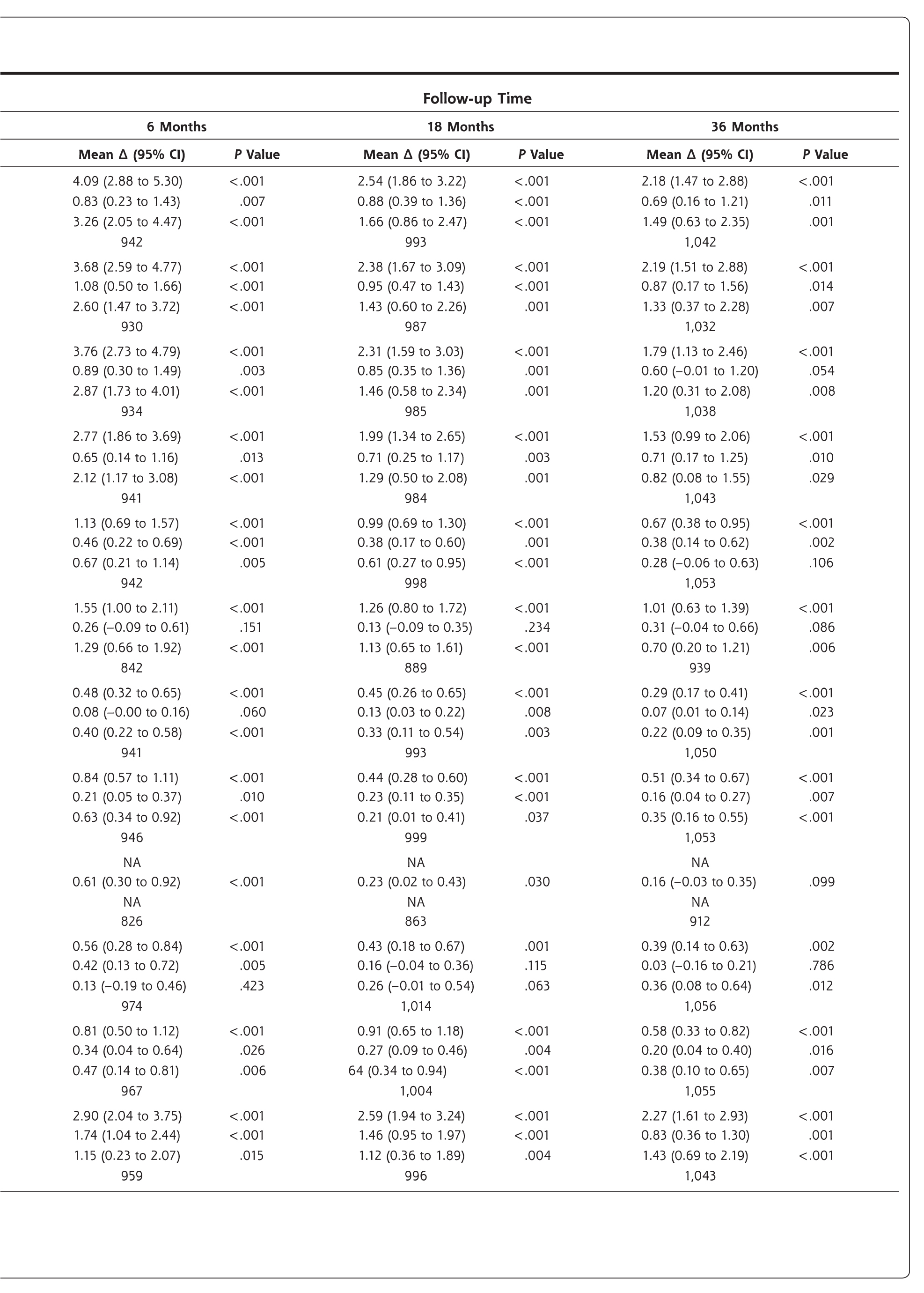
3年間の追跡期間を設定したコホート研究.1年かけて454名の乳がん検診の異常所見者を対象として採用した.1名の採用につき2名,同日に同じクリニックで乳がん検診を受診した無所見者2名を採用した(Figure 1).これらの参加者に対して,the Consequences of Screening in Breast Cancer(COS-BC; 12の心理社会的影響を測定する妥当性が評価済みの質問紙)への記入を研究開始時,1か月後,6か月後,18か月後,36か月後の時点で依頼した.

【結果】
最終診断後6か月において擬陽性者の「自身の存在価値」や「心の静寂性」の変化は乳がん患者のそれと変わりがないことが分かった(それぞれΔ=1.15; P=0.015,Δ=0.13: P=0.423).がんではないことが証明された3年後であってもマンモグラフィーの擬陽性者は12項目すべての心理社会的影響のアウトカムおいて陰性者と比較して有意にネガティブな心理社会的影響を受けていることが示された(12項目全てのアウトカムについてΔ>0,12項目中4項目においてP <0.01)(Table 2). 【結論】 マンモグラフィーによるスクリーニングによる擬陽性の結果には長期にわたる心理社会的な有害性がある.擬陽性の診断を受けた3年後の影響は陰性者のものと乳がん患者のものと間にある. - 考察とディスカッション -  費用対効果に優れ,対象とする疾患による死亡率を減少させるエビデンスの存在する「スクリーニング」はその実施が正当化され,受診率を向上させるべく私たち保健・医療職はますとしての住民に対しては受診を推奨している.しかし,日常の診療においては費用や死亡率からみたスクリーニングの利点に盲目的に従うのではなく, harm,例えばスクリーニング検査による苦痛やfalse positiveにより生じる無駄な検査,苦痛,心理的影響などについても患者と情報を共有し個別に相談していくべきものでもある.そのことについてあらためて考えさせられる文献であった. ↓ クリックすると画像全体が表示されます。 130726_4

↓ クリックすると画像全体が表示されます。
130726_5

↓ クリックすると画像全体が表示されます。
130726_6

開催日:平成25年7月17日

The effect of shared decision making on the screening of PSA

― Literature ―
 Paul K.J, et al. National Evidence on the Use of Shared Decision Making in Prostate-Specific Antigen Screening. Ann Fam Med July/August 2013 vol. 11 no. 4 306-314.


― Context for selection ―
 In our fellowship and residency of family medicine, we teach shared decision making in the most important of component 3 in PCCM and evaluate it through video review. We know some evidence about the impact of shared decision making on many health indexes. But more evidences are needed in the world of family medicine to explain its importance to various disciplines of medicine. This article attracted me so much.

― Summary ―
 PURPOSE Recent clinical practice guidelines on prostate cancer screening using the prostate-specific antigen (PSA) test (PSA screening) have recommended that clinicians practice shared decision making–a process involving clinician-patient discussion of the pros, cons, and uncertainties of screening. We undertook a study to determine the prevalence of shared decision making in both PSA screening and nonscreening, as well as patient characteristics associated with shared decision making.

METHODS A nationally representative sample of 3,427 men aged 50 to 74 years participating in the 2010 National Health Interview Survey responded to questions on the extent of shared decision making (past physician-patient discussion of advantages, disadvantages, and scientific uncertainty associated with PSA screening), PSA screening intensity (tests in past 5 years), and sociodemographic and health-related characteristics.

RESULTS Nearly two-thirds (64.3%) of men reported no past physician-patient discussion of advantages, disadvantages, or scientific uncertainty (no shared decision making); 27.8% reported discussion of 1 to 2 elements only (partial shared decision making); 8.0% reported discussion of all 3 elements (full shared decision making). Nearly one-half (44.2%) reported no PSA screening, 27.8% reported low-intensity (less-than-annual) screening, and 25.1% reported high-intensity (nearly annual) screening. Absence of shared decision making was more prevalent in men who were not screened; 88% (95% CI, 86.2%-90.1%) of nonscreened men reported no shared decision making compared with 39% (95% CI, 35.0%-43.3%) of men undergoing high-intensity screening. Extent of shared decision making was associated with black race, Hispanic ethnicity, higher education, health insurance, and physician recommendation. Screening intensity was associated with older age, higher education, usual source of medical care, and physician recommendation, as well as with partial vs. no or full shared decision making.

CONCLUSIONS Most US men report little shared decision making in PSA screening, and the lack of shared decision making is more prevalent in non-screened than in screened men. Screening intensity is greatest with partial shared decision making, and different elements of shared decision making are associated with distinct patient characteristics. Shared decision making needs to be improved in decisions for and against PSA screening.


― Discussion ―
 This article told us some important insights about shared decision making. First of all, shared decision making promotes screening effectively. The second, full shared decision making is associated with both non-screening and screening probably based on patients’ preferences and expectation about preventive care. The third, the definition of shared decision making is not yet established, so, we can explore best definition of shared decision making in future study. 
 It is often stated that the importance of family medicine is comprehensiveness, continuity and community-oriented care. But we cannot dismiss the importance of PCCM, especially component 3 “Finding common ground”. Japanese people have been often said to obey doctors’ opinion without their preference. But this comment gradually mismatches the reality of our practice. They also have their opinion and their preference and acknowledge the role of shared decision making. Don’t you think so? At that time, we can explore the style and role of shared decision making in Japanese medical culture. I am really interested in this theme. Let’s create evidence!

開催日:平成25年7月17日

ジャーナルクラブの利用は医師によるエビデンスに基づいた意思決定の支援に有用か?どのような要素が有効なジャーナルクラブの運用に必要か?

― 文献名 ―
 Are journal clubs effective in supporting evidence-based decision making? A systematic review. BEME Guide No. 16.
J. Harris et al. Med Teach 2011;33(1):9-23

― この文献を選んだ背景 ―
 Since 2012, weekly lecture for residents have launched and I’ve performed interactive lecture and on-site practice of about EBM for three times. In the evaluation with questionnaire, I found that residents felt somewhat difficult to perform 5 step of EBM in their daily practice. Therefore, I would try to improve the educational method and strategy this year. For the first step, I search for the best evidence of teaching EBM, and found this paper.

― 要約 ―
 Research background;A journal club (JC) is an interactive approach to making sense of evidence, which is commonly defined as ‘a group of individuals who meet regularly to discuss the clinical applicability of articles in current medical journals’ (Linzer 1987).
 Their popularity can be attributed to a number of perceived benefits -they help students and practitioners to keep up to date with health care literature, become more critical consumers of research evidence, and become better practitioners. Positive attitudes about JCs have changed little over the past 15 years.
 Although education research would support a JC approach, there is little direct evidence that JCs are actually effective in reaching their stated goals.
 Research Question;Is the JC effective in supporting EB decision making? Is it possible to determine which elements of a JC contribute to effectiveness?
 Search strategies;The search strategy was developed using Medline (Table 3) and adapted for the requirements of other databases. Bibliographies of relevant publications and review articles were scanned and relevant references were retrieved. No language restrictions were applied.
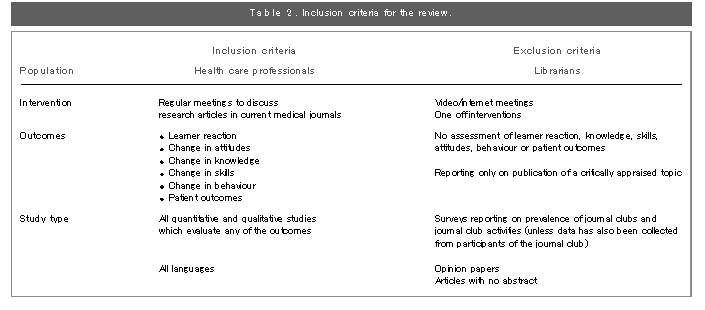
Inclusion/exclusion criteria:See Table2.
Findings:18 papers were included in the final review. Of those, 17 were for postgraduates and 1 was for both undergraduates and postgraduates. Since there was a wide range of heterogeneity of the JC intervention, authors judged it was difficult to perform meta-analysis.

(1)Main findings;The included studies reported improvements in reading behaviour (N= 5/11), increased confidence in critical appraisal (N=7/7), improved test scores on critical appraisal (N=5/7), and increased ability to use findings in clinical practice (N=5/7).
They concluded that they couldn’t judge JCs are effective in supporting EB decision making, because only seven studies attempted to measure this endpoint and they relied on self-report.

(2)Methodological weaknesses are below.
 1.The description of the interventions lacks attention to detail, preventing adequate replication. 
 2.There was a paucity of learner assessment and few validated tools were used for quantitative assessment.
 3.The large variation in JC design and delivery limits comparison.

(3)Identifying active ingredients;
Analysis of the various elements contained in JCs produced a cluster of elements that may contribute to the overall effect. These were termed active ingredients, and included mentoring, didactic support, use of structured review instruments, adhering to principles of adult learning, using multifaceted approaches to learning, and integrating learning with other academic and clinical activities.

(4)Implications for practice
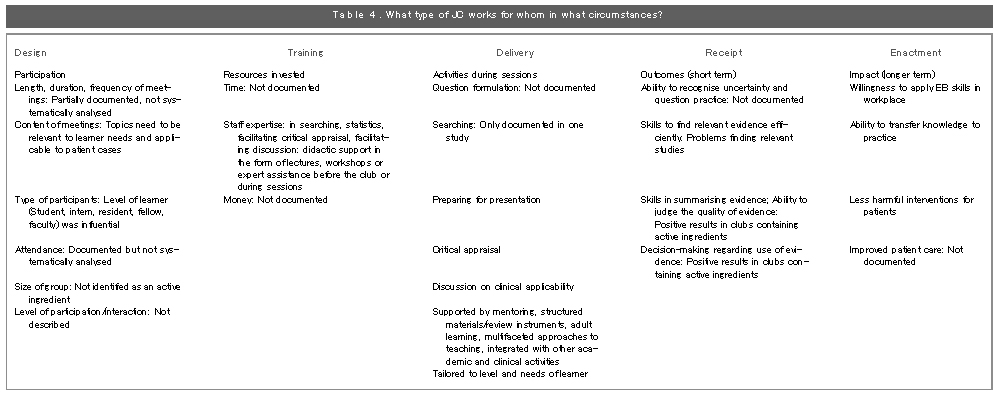
Our review illustrates that JCs are used widely across different sectors of the healthcare and used in a variety of different ways. Active ingredients are found at each stage of the educational intervention (The author applied five elements model of educational intervention and describes the results of this review about each facet in Table 4).
For example, if a JC is being designed for residents, the content should be directly applicable to patient cases they find problematic, enabling application of evidence in a real-time setting; didactic support could be provided based on an educational needs assessment (e.g. for statistical support). Critical appraisal and discussion of clinical applicability could be facilitated by senior clinicians who are in supervisory positions, enabling the transfer of discussion into practice.

― 考察とディスカッション ―
 Now I plan on-line EBM WS for residents this year, this article has given me several hints. Although some of those are same as other educational sessions like adult learning and multifaceted approaches to teaching, others have some practical implication for me.
1. I would like to pay more attention on individual learners’ needs. I’ve already sent some questionnaire to know their knowledge and practice of EBM.
2. I would like to change the contents more relevant to their daily patient cases. I will discard the discussion based on the case scenario and start with gathering and evaluating their daily clinical questions from the first session.
3. Mentoring is important. I would try the hands on session of EBM STEP1 to 3. (This part was on-site activity last year.)
4. I would like to introduce more structured material for critical appraisal.
5.The support of ‘on-site’ educators is imperative. I ask for your support.
Do you manage journal clubs in your clinic? If you have, how do you manage it? Is there some implication for you?

130710_1
 ↓ 画像をクリックすると全体が表示されます。
130710_2

開催日:平成25年7月10日